
Langlebigkeit
Zahnschmelz und Sporternährung
Why repeated gels, sports drinks and reduced saliva challenge enamel — and how athletes can protect the mouth without compromising performance.
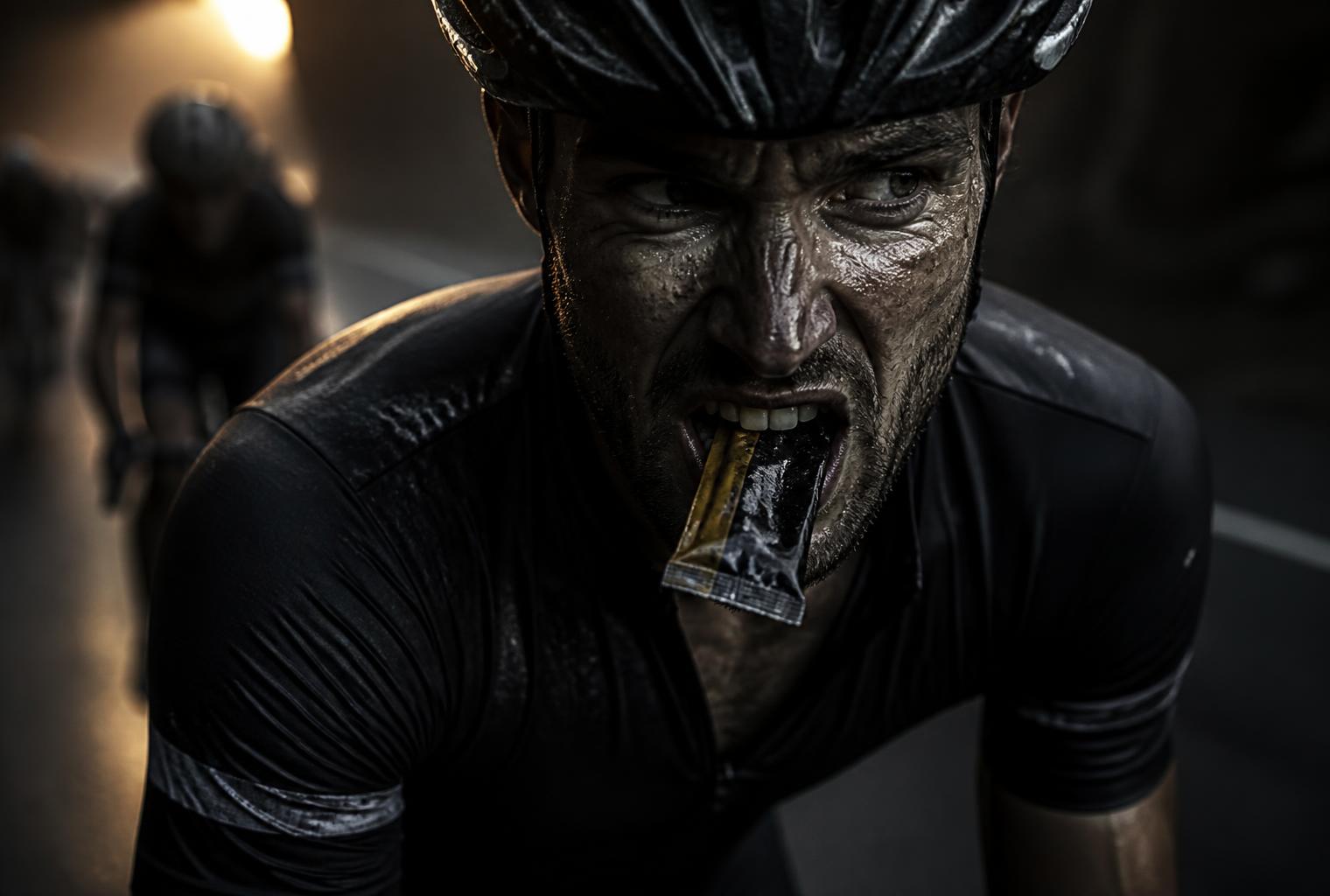
Endurance nutrition asks athletes to do something unusual.
For hours at a time, they repeatedly expose the mouth to carbohydrates, acids, concentrated gels and sports drinks — often while breathing heavily and producing less saliva than usual.
That fuelling may be essential for performance. But the mouth still has to manage the consequences.
The problem is not that athletes use gels or carbohydrate drinks. The problem is the combination of:
- frequent exposure;
- low-pH products;
- fermentable carbohydrate;
- reduced oral clearance;
- mouth breathing;
- dehydration;
- limited recovery time between servings.
Fuel → acid and carbohydrate exposure → reduced saliva → incomplete recovery → more fuel.
01
Energie
Gels, drinks and chews deliver carbohydrate and acid.
02
Acid attack
pH drops; minerals begin to leave the enamel surface.
03
Weniger Speichel
Mouth breathing, dehydration and stress reduce flow.
04
Incomplete recovery
Slower neutralisation, slower remineralisation.
05
Repeat
Frequent exposure tips the balance the wrong way.
01
Enamel is strong — but not invulnerable
Tooth enamel is the hardest tissue in the human body, but it is still vulnerable to repeated acid exposure. When the pH around the tooth falls, minerals can begin leaving the enamel surface. This is called demineralization.
Saliva normally helps reverse the situation by:
- diluting acids;
- clearing carbohydrate residue;
- buffering oral pH;
- providing calcium and phosphate;
- supporting remineralization.
02
Erosion and caries are different problems
They are often discussed together, but they are not the same.
Dental erosion
Erosion is the chemical loss or softening of tooth structure caused directly by acids that do not come from bacteria: sports drinks, energy drinks, acidic gels, citrus products, soft drinks, or gastric acid from reflux or vomiting.
Dental caries
Caries develops when bacteria in dental plaque metabolize fermentable carbohydrates and produce acids. The main risk is not simply how much sugar is consumed — frequency matters. A large amount consumed once gives the mouth a chance to recover. Smaller carbohydrate exposures every 15–30 minutes can repeatedly lower plaque pH and shorten the recovery period.
Endurance athletes may face both processes at once: direct acidity from a product and bacterial acid production from its carbohydrate.
03
How acidic are energy gels?
A 2026 laboratory study tested four commercial energy gels under different dilution conditions. The undiluted gels were strongly acidic, with pH values broadly around 2 to 3. Mixing them with increasing amounts of artificial saliva raised the pH, and greater dilution reduced the acidic exposure.1
The researchers emphasized that pH alone does not determine how much erosion will occur inside a real mouth. Product acidity, contact time, saliva, frequency and individual dental health all matter.
This does not mean that one gel removes a measurable percentage of enamel. There is no scientifically defensible formula such as one gel equals 5% tooth damage. The evidence supports a more careful conclusion:
pH 2–3
Undiluted gels (lab)
4
Commercial gels tested
↑ pH
With greater dilution
04
Sports drinks are not automatically tooth-destroying
Laboratory studies show that many sports drinks have low pH and can soften or dissolve enamel under controlled conditions. However, a 2025 systematic review concluded that current human evidence does not establish that sports-drink consumption alone causes dental erosion in athletes. The real-world relationship is affected by frequency, saliva, oral hygiene, product characteristics and total diet.3
This distinction matters. Athletes should not be frightened away from the carbohydrate and fluid they need. The correct message is not sports nutrition destroys teeth. It is:
Sports nutrition can create repeated dental challenges that deserve a deliberate protection strategy.
05
Why endurance athletes may be vulnerable
Salivary flow may decrease
Dehydration, sympathetic activation and prolonged mouth breathing can reduce salivary flow or make saliva feel thicker — meaning slower acid clearance, less effective buffering, reduced lubrication and longer contact between fuel residue and teeth.
Exposure becomes frequent
A runner might take a gel every 25–30 minutes, frequent sips of carbohydrate drink, chews between gels, cola at aid stations and acidic fruit or sweets. The teeth may receive little uninterrupted recovery time for many hours.
Products remain in the mouth
Thick gels and chews may coat the teeth, especially when taken without enough water. Holding a drink in the mouth, swishing it around or sipping continuously extends the contact period.
Brushing may not solve the immediate problem
Brushing directly after prolonged acidic exposure may add mechanical abrasion while the enamel surface is temporarily softened. Oral protection during endurance therefore depends on more than brushing before and after the session.
06
What do we know about athlete oral health?
Oral-health problems are common in studied athlete populations. A 2024 review reported broad prevalence ranges among elite athletes:2
20–84%
Dental caries
42–59%
Dental erosion
58–77%
Gingivitis
15–41%
Periodontal disease
These ranges vary greatly because the studies involved different sports, countries, recruitment methods and diagnostic standards. They should not be interpreted as the risk for every individual athlete. A 2025 systematic review and meta-analysis also found a high prevalence of caries, gingivitis and erosion among elite athletes, while highlighting substantial differences and limitations across studies.6
At the London 2012 Olympic Village dental clinic, 55% of assessed athletes had dental caries, 45% had dental erosion, 76% had gingivitis and 18% reported an effect of oral health on training or performance. Because these athletes were recruited through a dental clinic, the figures should not be generalized to every Olympian — but they show that oral disease can be relevant even at the highest sporting level.45
07
The answer is not to under-fuel
This is the most important point. Carbohydrate intake supports endurance performance. Athletes should not protect their teeth by failing to meet their energy needs.
08
Practical ways to protect enamel
Water can help dilute and clear concentrated fuel; the 2026 laboratory study found that greater dilution with artificial saliva increased pH, although it could not prove a specific reduction in clinical erosion.1 Follow the manufacturer's instructions — some gels are intended to be taken with water, others are marketed as isotonic.
A strategy based entirely on acidic sweet products may also become difficult for the athlete's sensory tolerance. Depending on the event, a plan may mix gels, carbohydrate drink, chews, soft food, neutral or savoury options and plain water.
Take with water
Dilute and clear. Reduce contact time.
Swallow, don't swish
Avoid holding acidic products around the teeth.
Rinse with water
Helps remove residue and shorten exposure.
Don't brush immediately
Rinse first; wait before brushing softened enamel.
Use fluoride toothpaste
Established protection between sessions.
See your dentist
Early erosion and early caries rarely hurt.
09
Where UNBTN fits
UNBTN Oral Performance was designed for a part of endurance nutrition that is usually ignored: the oral environment between fuel servings. It is a sugar-free lozenge designed to stimulate natural saliva and support oral comfort during prolonged exercise.7
By stimulating saliva, UNBTN may support:
- natural lubrication;
- relief of dry-mouth sensations;
- clearance of concentrated fuel residue;
- acid buffering;
- a more comfortable mouth between sweet products;
- continued tolerance of the planned nutrition strategy.
UNBTN uses calcium-balanced HAp⁺, developed to stimulate saliva while being designed as non-erosive under its validated testing conditions. An ordinary acidic sweet may stimulate saliva while also introducing another potentially erosive exposure — HAp⁺ was developed around the challenge of creating a mouth-watering formulation while controlling its mineral balance through added calcium.
10
Is UNBTN necessary?
A credible scientific article should not claim that every athlete needs UNBTN. Athletes can support oral health through water, structured fuelling, fluoride, good dental care and appropriate product choices.
UNBTN becomes particularly relevant when an athlete repeatedly experiences:
- a dry or sticky mouth;
- concentrated gel residue;
- sweetness fatigue;
- discomfort between fuel servings;
- reluctance to take the next planned carbohydrate.
For athletes whose mouth becomes the weak link in a long fuelling plan, UNBTN is a purposeful oral-performance tool.
What UNBTN does not do
It does not replace water, carbohydrate, electrolytes, fluoride toothpaste or dental treatment. It does not neutralize every gel, repair existing enamel damage, or prevent all caries or erosion. Its role is supportive: stimulate saliva, support oral comfort, help the mouth manage repeated fuelling.
11
A practical endurance routine
1
Energie
Take your planned carbohydrate.
2
Water
Drink or rinse with water as appropriate.
3
UNBTN
Use between servings when the mouth feels dry or overloaded.
4
Keep going
Continue the planned hydration and nutrition strategy.
Test this during training rather than introducing it for the first time on race day.
12
The real cost of fuelling
The cost of endurance fuelling should not be framed as a choice between performance and healthy teeth. Athletes need carbohydrates. They also need a mouth capable of tolerating years of training, racing and repeated sports nutrition.
The better approach is to treat oral care as part of performance preparation:
- fuel enough;
- reduce unnecessary exposure;
- use water intelligently;
- stimulate and support saliva;
- protect enamel with established dental care;
- detect problems early.
Your teeth are not separate from your endurance system. Fuel the body. Support the mouth. Protect the years ahead.
Selected references
- 1.Beti MM, et al. Acidic pH of Commercial Energy Gels, Potential Dental Risk, and the Neutralizing Effect of Casein Phosphopeptide–Amorphous Calcium Phosphate. Applied Sciences. 2026. DOI
- 2.Schulze A, et al. Sports Diet and Oral Health in Athletes: A Comprehensive Review. 2024. PMC
- 3.Gálvez-Bravo F, et al. Erosive Potential of Sports, Energy Drinks, and Isotonic Solutions on Athletes' Teeth: A Systematic Review. Nutrients. 2025. PubMed
- 4.Needleman I, et al. Oral Health and Impact on Performance of Athletes Participating in the London 2012 Olympic Games. Br J Sports Med. 2013. PMC
- 5.Needleman I, et al. Oral Health and Elite Sport Performance. Br Dent J. 2014. PMC
- 6.Zamudio FC, et al. Prevalence and Severity of Oral Conditions in Elite Athletes: A Systematic Review and Meta-Analysis. 2025. PMC
- 7.Bianchetti CAB, et al. Effect of Lozenge Surface Texture, Taste and Acidity on Stimulated Whole Salivary Flow. 2024. PubMed