
Fundamentos
Por qué la hidratación, la alimentación durante el esfuerzo y el confort oral empiezan en la boca
Every gel, drink and chew passes through the mouth first. Discover why saliva matters during endurance — and how UNBTN supports the mouth behind the fuelling plan.
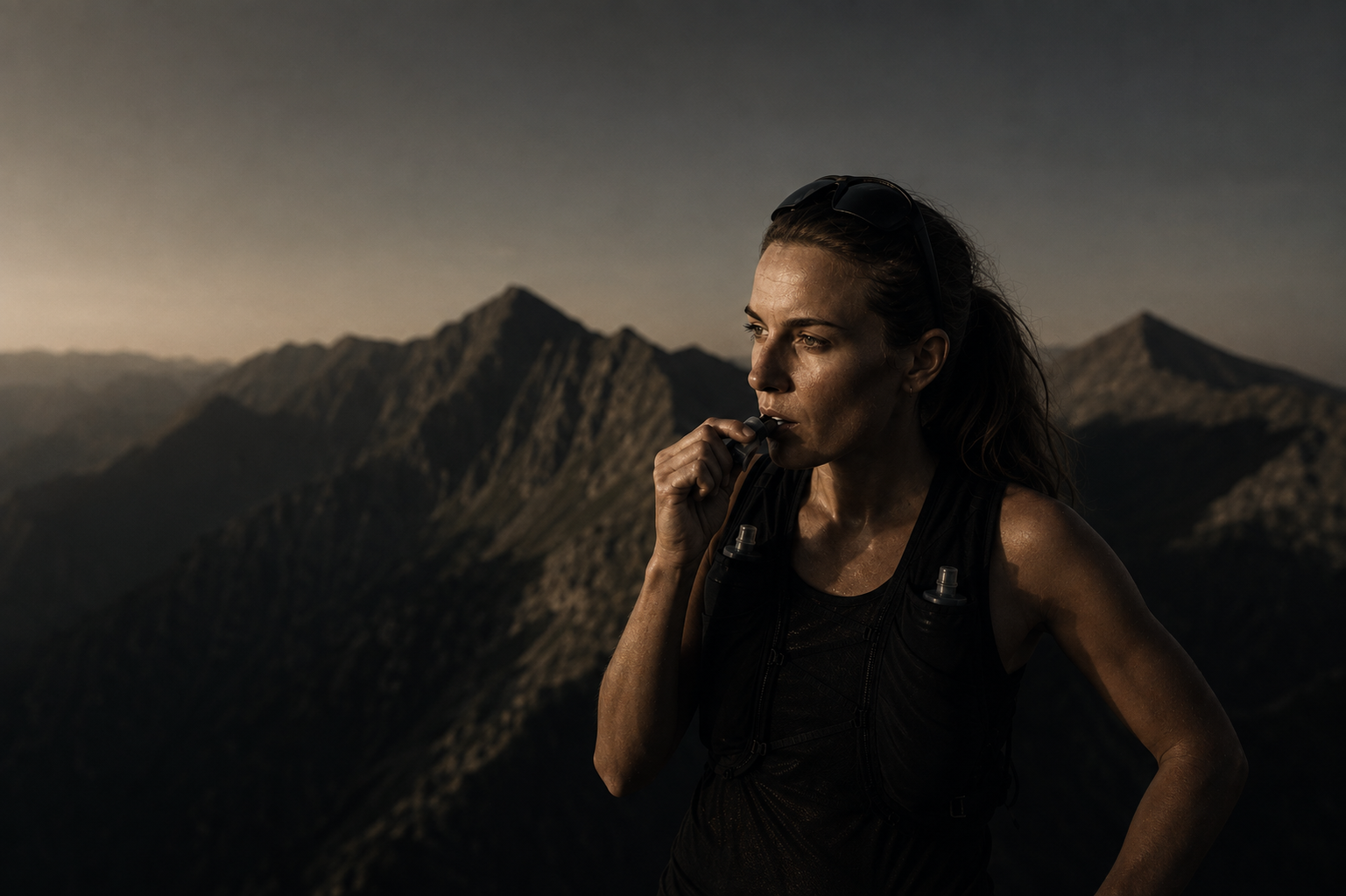
Endurance athletes plan almost everything.
We monitor heart rate, pace, power, elevation, carbohydrate intake, sodium, fluids and recovery. We train our muscles, cardiovascular system and gut for the demands of long races.
But every sip, gel and chew must pass through one part of the body first:
The mouth.
During prolonged exercise, the mouth can become dry and sticky. Gels become harder to tolerate. Sweet flavours become overwhelming. Concentrated fuel can remain around the teeth, and the athlete may begin avoiding nutrition they still need.
The mouth is the first point of contact between an athlete and their hydration and fuelling strategy.
That is why saliva deserves more attention.
01
Saliva is part of the endurance system
Saliva is mostly water, but it does much more than simply keep the mouth wet.
It supports lubrication, swallowing, taste, the early digestion of carbohydrates, clearance of food and fuel residue, acid buffering, tooth mineral balance and the mouth's natural immune defenses.2
Most of the time, we barely notice these functions.
During a long run, ride or race, they become increasingly important — especially when salivary flow begins to fall.
- Lubrication
- Swallowing
- Taste
- Fuel clearance
- Acid buffering
- Oral protection
02
Why the mouth becomes dry during endurance exercise
Several parts of endurance exercise can contribute to a dry, uncomfortable mouth:
- heavy mouth breathing
- fluid loss through sweat
- heat and altitude
- rising exercise intensity
- stress and sympathetic nervous-system activity
- repeated consumption of concentrated carbohydrate products
Research shows that dehydration can reduce salivary flow while increasing the concentration and osmolality of the saliva that remains.1 This helps explain why an athlete's mouth can feel both dry and unusually sticky.
Dry mouth is not a perfect measure of whole-body hydration. A moist mouth does not prove that an athlete is adequately hydrated, and a dry mouth does not automatically mean dangerous dehydration.
But oral dryness is still a real endurance experience — and it can make a well-designed fuelling plan increasingly difficult to follow.
03
When a perfect fuelling plan stops feeling perfect
A fuelling plan may look excellent on paper:
- 80–100 grams of carbohydrate per hour
- regular sodium intake
- a personalised fluid target
- caffeine at selected points
- a mix of gels, drinks and solid food
But the plan only works when the athlete can continue consuming it.
After several hours, concentrated gels may begin to feel glue-like. Chews can become difficult to manage. Sweetness accumulates. The mouth feels coated, and the athlete may crave plain water or savoury food even though the body still needs carbohydrate.
In endurance sport, a small irritation repeated for six, ten or twenty hours is no longer a small irritation.
04
The energy-gel paradox
Energy gels are valuable performance tools. During prolonged exercise, athletes need rapidly available carbohydrate, and gels provide a compact and measurable way to consume it.
The problem is not that athletes use gels.
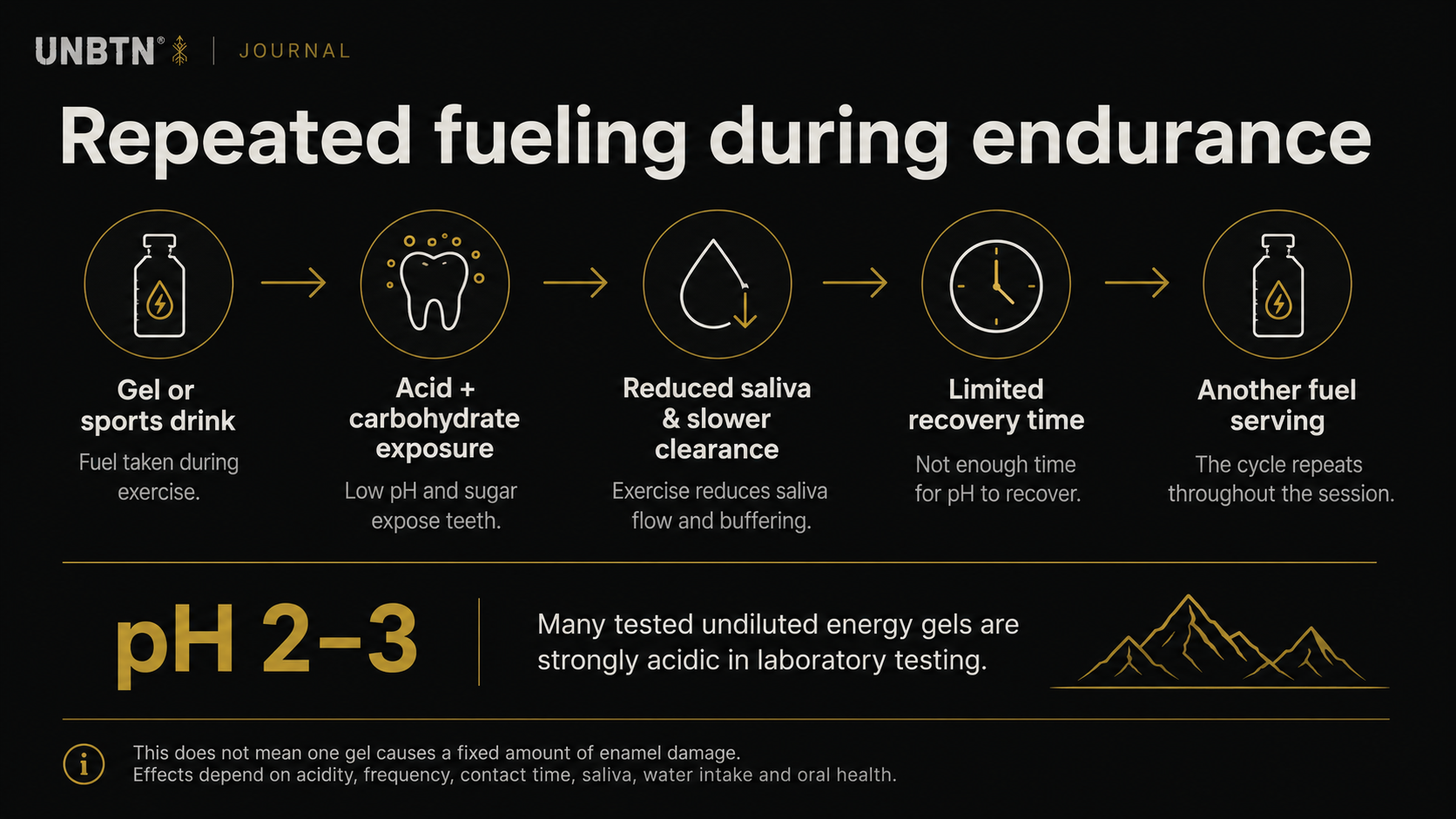
The challenge is the environment in which gels are repeatedly consumed.
05
Why frequency matters
When fermentable carbohydrate remains in the mouth, oral bacteria can metabolise it and produce acids.
Saliva normally helps clear carbohydrate, buffer acids and return the mouth towards its usual pH. But when products are consumed repeatedly — sometimes every 20 or 30 minutes — the teeth may receive limited recovery time between exposures.6
Athletes should not respond by avoiding the carbohydrates they need. Oral-health protection should be built around an effective fuelling plan — not achieved by under-fuelling.
06
Oral-health problems are common in athletes
55%
Dental caries
45%
Dental erosion
76%
Gingivitis
18%
Effect on training or performance
These athletes were recruited through the Olympic Village dental clinic, so the results should not be treated as representative of every Olympic athlete. They nevertheless show that oral-health problems can be relevant even at the highest level of sport.3
07
Saliva is the mouth's natural support system
Saliva helps lubricate dry tissues, make swallowing more comfortable, dilute acids, clear carbohydrate residue, buffer changes in oral pH and supply calcium and phosphate to the tooth surface.7
When salivary flow decreases, these functions may become less effective.
How can athletes keep taking the fuel they need while supporting the mouth through which that fuel must pass?
UNBTN Oral Performance
Designed for the mouth that never stops working.
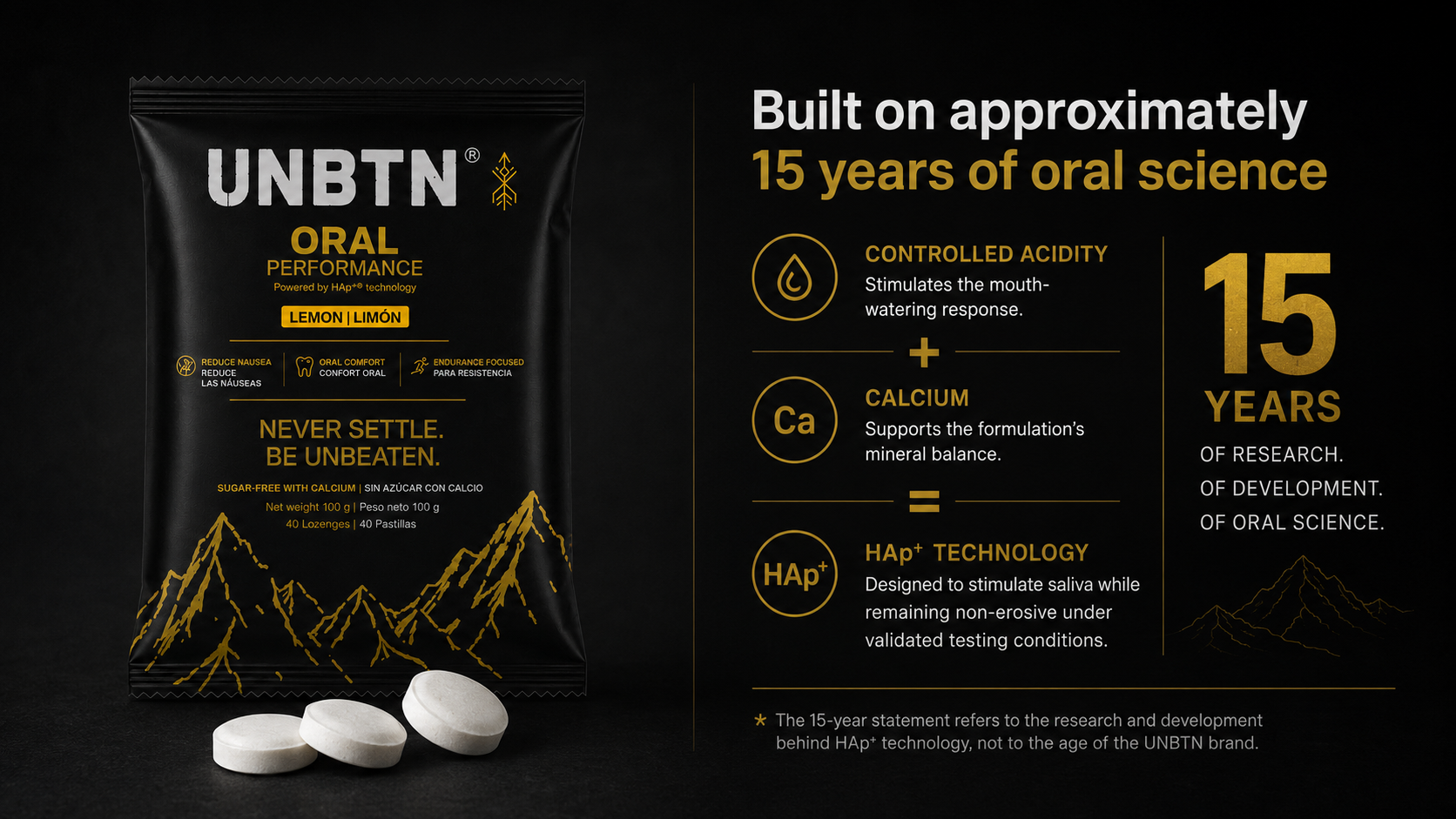
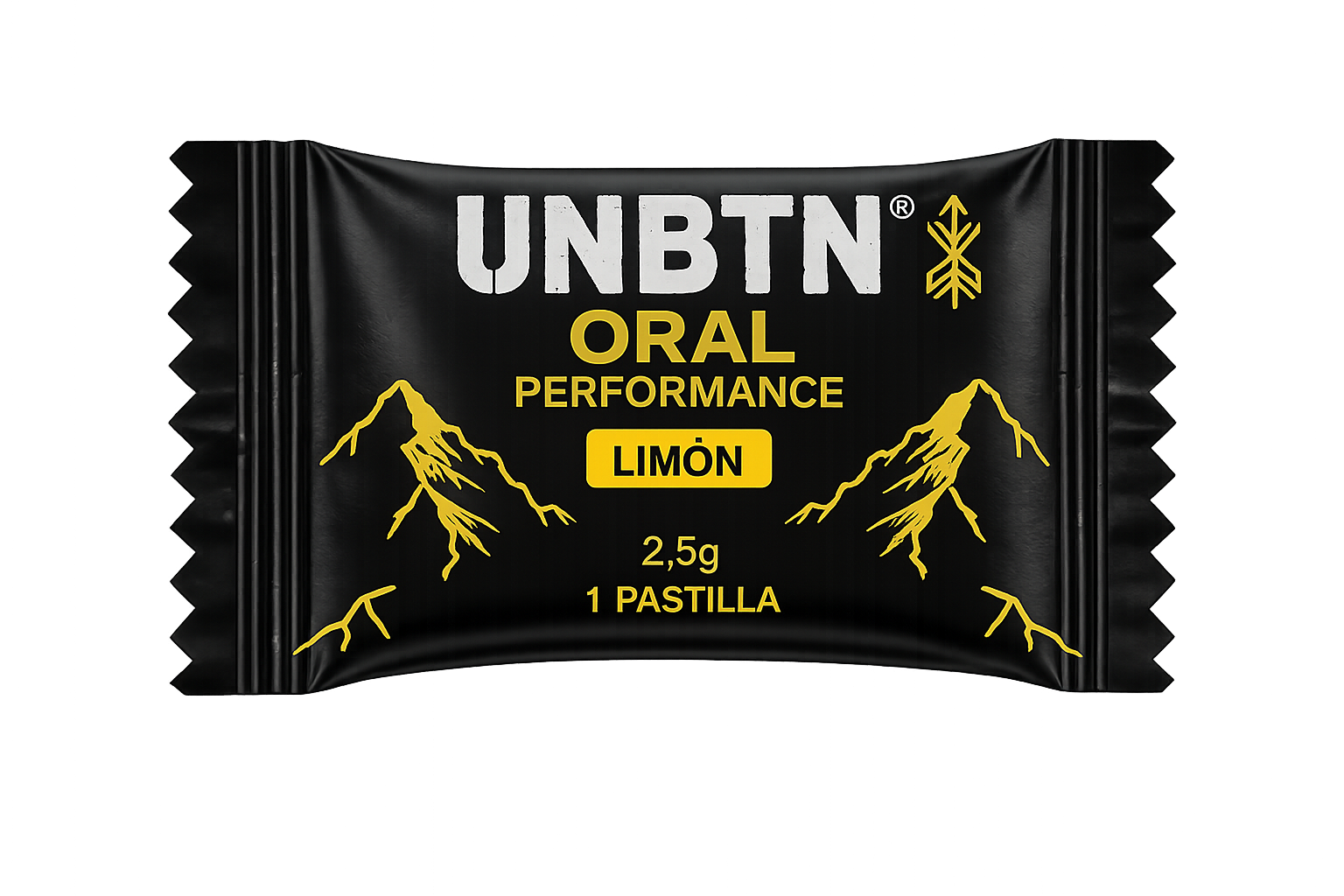
UNBTN Oral Performance is a sugar-free lozenge designed to stimulate natural saliva and support oral comfort during prolonged exercise.
It is not another gel, sports drink or electrolyte product.
It supports the oral environment through which an athlete's hydration and fuel must pass.
Protocol
How UNBTN fits into an endurance fuelling plan
01
Take your planned fuel
02
Drink water as appropriate
03
Use UNBTN between fuelling moments
04
Continue your nutrition strategy
An athlete may choose to use UNBTN when the mouth begins to feel dry, sticky, coated or overloaded by sweetness.
Test the timing during training before using it in an important race.
UNBTN is
- —saliva stimulating
- —sugar-free
- —oral-comfort supporting
- —endurance focused
- —powered by HAp⁺
- —an oral-performance tool
UNBTN is not
- ×a source of hydration
- ×a source of race carbohydrate
- ×a replacement for electrolytes
- ×a treatment for dental disease
- ×a guarantee against dental problems
- ×a performance shortcut
Practical guidance
Protect the mouth without compromising performance
- 01Take gels with water when appropriate.
- 02Swallow products rather than holding or repeatedly swishing them around the teeth.
- 03Use a structured fuelling strategy instead of unnecessary continuous sipping.
- 04Rinse the mouth with water when practical.
- 05Avoid aggressive toothbrushing immediately after prolonged acidic exposure.
- 06Use fluoride toothpaste and attend regular dental checks.
- 07Train the mouth alongside the gut by testing flavour, residue, water requirements and oral comfort during long sessions.
Carbohydrate remains essential during prolonged endurance exercise. This guidance must never encourage athletes to under-fuel.4
Conclusion
Performance begins before fuel reaches the stomach
Sports nutrition usually focuses on what happens after an athlete swallows: carbohydrate absorption, oxidation, sodium, hydration and caffeine.
But before fuel reaches the stomach, the athlete must taste it, tolerate it and swallow it.
Saliva sits at the intersection of hydration, fuelling, taste, swallowing, oral comfort and dental protection.
It is not a performance shortcut.
It is an overlooked part of the endurance system.
Athletes train the heart.
They train the legs.
They train the gut.
Now it is time to support the mouth.
Referencias
- 1.Walsh NP, Laing SJ, Oliver SJ, et al. Saliva parameters as potential indices of hydration status during acute dehydration. Med Sci Sports Exerc. 2004;36(9):1535–1542. doi:10.1249/01.MSS.0000139797.26760.06
- 2.Bishop NC, Gleeson M. Acute and chronic effects of exercise on markers of mucosal immunity. Front Biosci. 2009;14:4444–4456. doi:10.2741/3540
- 3.Needleman I, Ashley P, Fine P, et al. Oral health and impact on performance of athletes participating in the London 2012 Olympic Games: a cross-sectional study. Br J Sports Med. 2013;47(16):1054–1058. doi:10.1136/bjsports-2013-092891
- 4.Needleman I, Ashley P, Meehan L, et al. Poor oral health including active caries in 187 UK professional male football players: clinical dental examination performed by dentists. Br J Sports Med. 2016;50(1):41–44. doi:10.1136/bjsports-2015-094953
- 5.Broad EM, Rye LA. Do current sports nutrition guidelines conflict with good oral health? Gen Dent. 2015;63(6):18–23. PubMed
- 6.Sirimaharaj V, Brearley Messer L, Morgan MV. Acidic diet and dental erosion among athletes. Aust Dent J. 2002;47(3):228–236. doi:10.1111/j.1834-7819.2002.tb00334.x
- 7.Amaechi BT, van Loveren C. Fluorides and non-fluoride remineralization systems. Monogr Oral Sci. 2013;23:15–26. doi:10.1159/000350458
- 8.Gil-Montoya JA, Silvestre FJ, Barrios R, Silvestre-Rangil J. Treatment of xerostomia and hyposalivation in the elderly: a systematic review. Med Oral Patol Oral Cir Bucal. 2016;21(3):e355–e366. doi:10.4317/medoral.20969